Solar System & Halley's Comet 3D Orbit Simulation
An exploratory Python model of the eight planets and Halley's Comet. It samples elliptical orbits, rotates them into three dimensions, and produces animations. A lookup function estimates distances between pairs of planets from the nearest stored time samples. The positions are illustrative approximations, not precision ephemerides.
- ▪Defines approximate orbital size, shape, inclination, and orientation for the eight planets and Halley's Comet.
- ▪Rotates sampled ellipse coordinates to produce a three-dimensional orbital view.
- ▪Stores sampled positions and times, then estimates distances between two planets by selecting nearby samples.
- ▪Exports orbital arrays and renders animations for visual exploration.
Methodology
The program samples ellipses using specified orbital parameters, applies inclination and planar rotations, and stores the resulting positions with approximate time coordinates. Planetary speeds are adjusted using the distance from the Sun; the Halley model updates speed with a vis-viva expression. Distance queries select the nearest stored samples for two planets and compute their Euclidean separation.
Results & Analysis
The project produced orbit animations and position arrays for the planets and Halley's Comet. Distance estimates come from sampled trajectories and are intended for visualization.
Figures
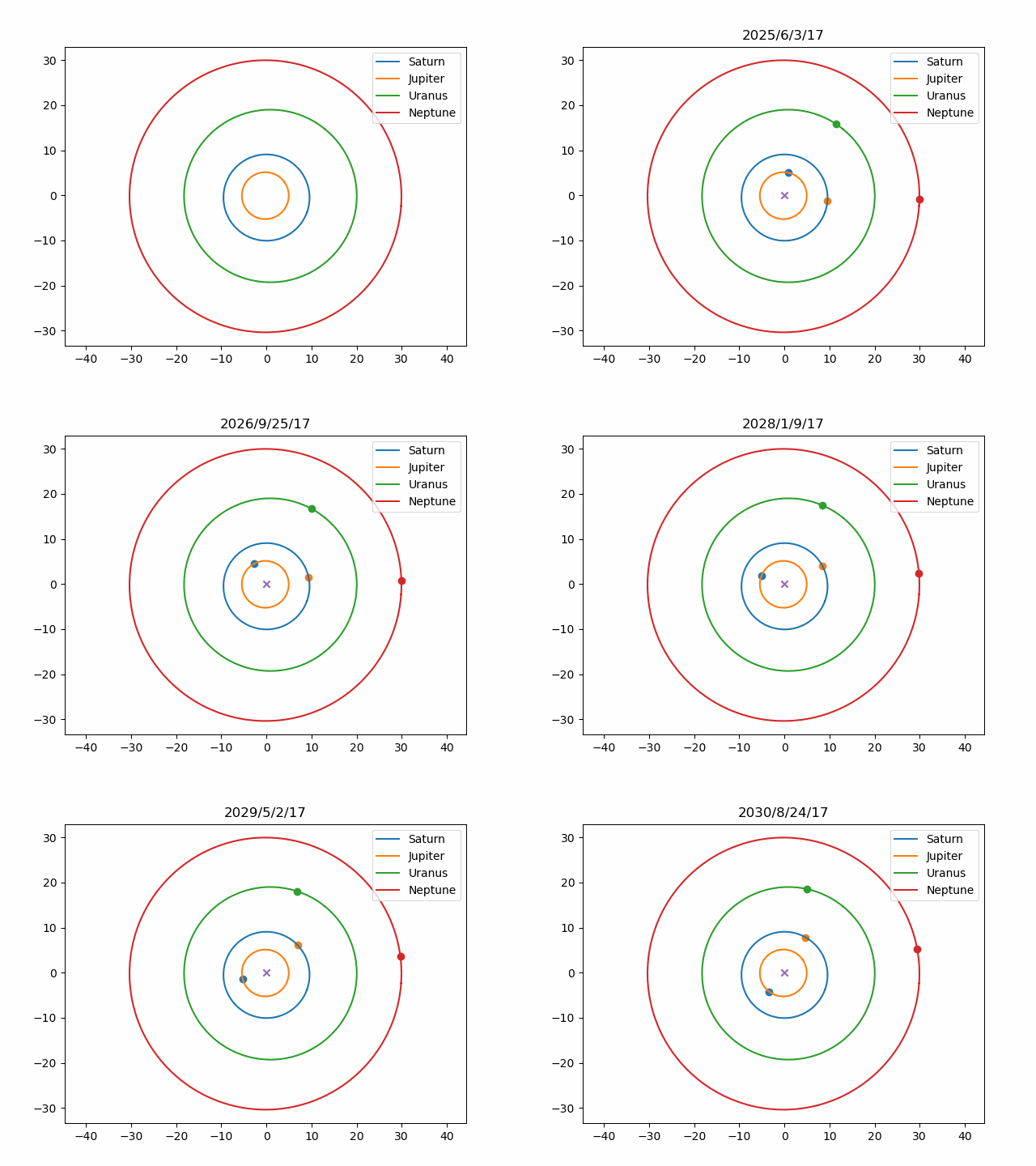
Figure 1: 3D Dynamic Orbit Simulation of inner planets and Halley's Comet (Matplotlib animation output)
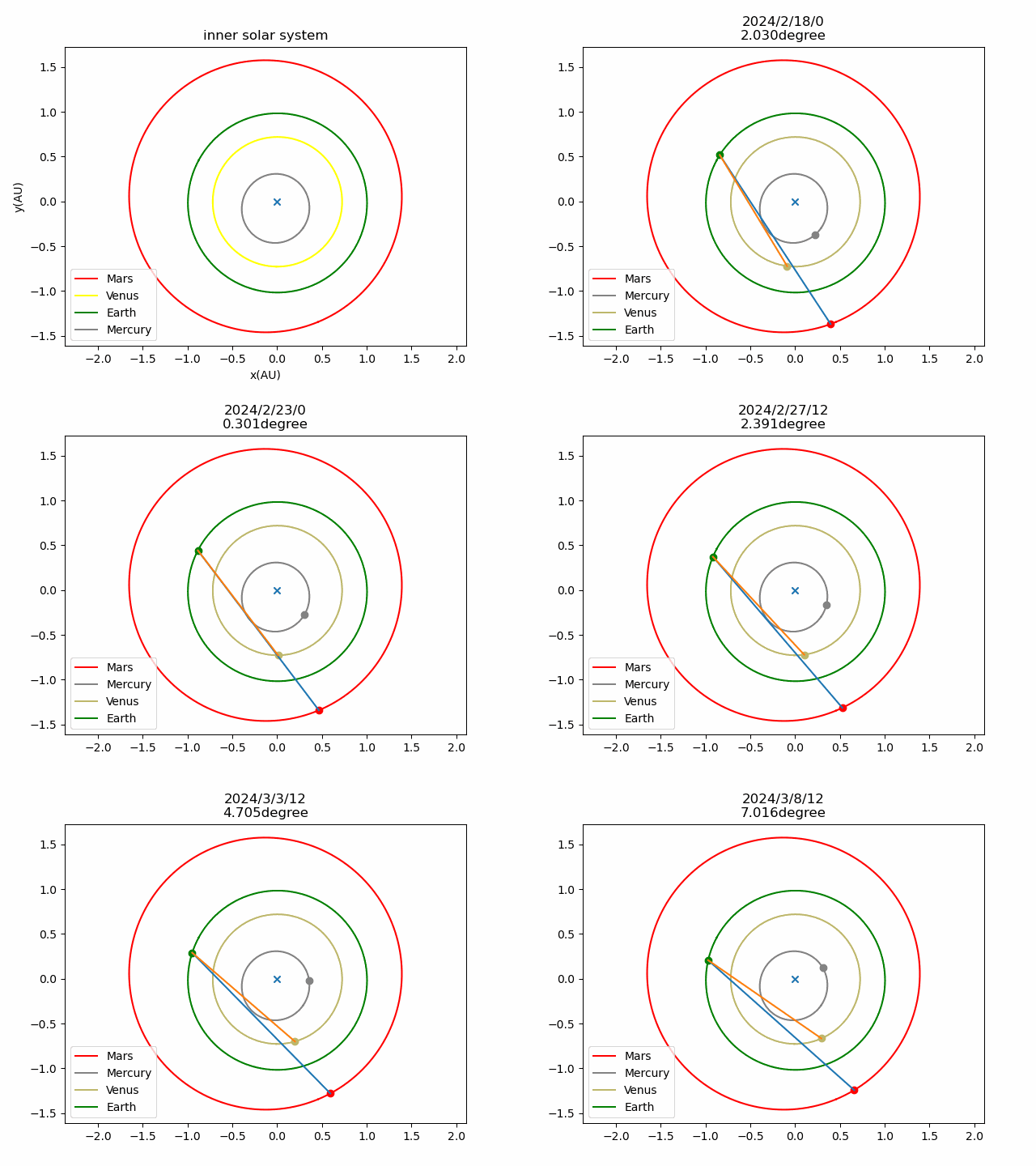
Figure 2: Earth-centered view showing the angular positions of Venus, Earth, and Mars — illustrating synodic angle variation over time
Solar System & Halley's Comet 3D Orbit Simulation
Context
Independent project
Period
Feb 2024
Overview
An exploratory Python model of the eight planets and Halley's Comet. It samples elliptical orbits, rotates them into three dimensions, and produces animations. A lookup function estimates distances between pairs of planets from the nearest stored time samples. The positions are illustrative approximations, not precision ephemerides.
- Defines approximate orbital size, shape, inclination, and orientation for the eight planets and Halley's Comet.
- Rotates sampled ellipse coordinates to produce a three-dimensional orbital view.
- Stores sampled positions and times, then estimates distances between two planets by selecting nearby samples.
- Exports orbital arrays and renders animations for visual exploration.
Methodology
The program samples ellipses using specified orbital parameters, applies inclination and planar rotations, and stores the resulting positions with approximate time coordinates. Planetary speeds are adjusted using the distance from the Sun; the Halley model updates speed with a vis-viva expression. Distance queries select the nearest stored samples for two planets and compute their Euclidean separation.
Results & Analysis
The project produced orbit animations and position arrays for the planets and Halley's Comet. Distance estimates come from sampled trajectories and are intended for visualization.
Figures
Figure 1: 3D Dynamic Orbit Simulation of inner planets and Halley's Comet (Matplotlib animation output)
Figure 2: Earth-centered view showing the angular positions of Venus, Earth, and Mars — illustrating synodic angle variation over time